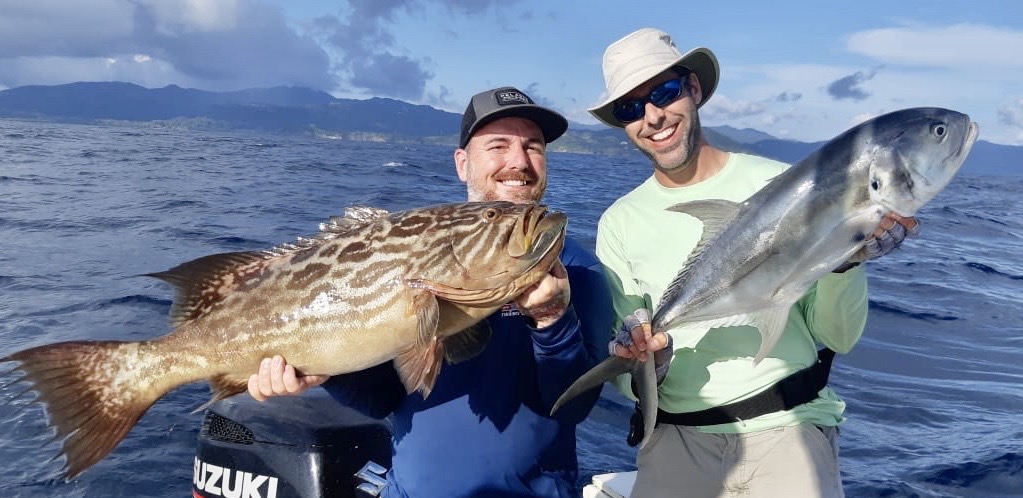
You’re heading to Cuba, Costa Rica or the Caribbean for a week of saltwater fishing. You want to target real pelagic and bottom fish — tuna, grouper, snapper, mahi-mahi — not just troll the surface hoping for the best. Slow pitch jigging might be the most effective technique you’ve never tried. Here’s everything you need to know, from lure selection to finding the right captain.
Who Is Slow Pitch Jigging For?
The majority of our Canadian customers are anglers who travel south — Cuba, Mexico, Costa Rica, the Caribbean — and want to fish seriously during their trip. Slow pitch jigging is not a shore technique. These lures (80 to 340 grams) are designed for deep water fishing from a boat, at depths of 30 to 200 metres. You need to be drifting over structure, not standing on a beach.
That said, lighter jigs (20–60g) from the same family can be cast from shore and retrieved quickly to avoid snagging the bottom. In Canada, local anglers use them effectively for striped bass. But the real power of slow pitch jigging reveals itself in the open ocean.
Why Slow Pitch Jigging Outfishes Everything Else
Most fishing lures only work in the top 20 metres of water. If you’re fishing over 80 metres of depth, traditional lures cover just 25% of the water column — you’re ignoring the other 75%. Slow pitch jigging covers the entire water column, from surface to bottom. That’s its fundamental advantage.
When your boat drifts with the current (engine off), your jig travels along the bottom at the speed of the current, covering a large area of seabed. You’re essentially delivering the lure directly to where the fish are holding — as one experienced captain put it: “You’re knocking on their door.”
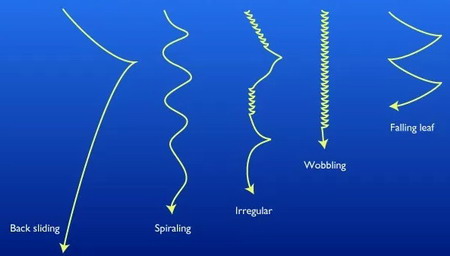
The different falling movements of a slow pitch jig — the “falling leaf” action is what triggers strikes.
Slow Pitch vs Speed Jigging: What’s the Difference?
| Slow Pitch Jigging | Speed Jigging | |
|---|---|---|
| Lure shape | Short, compact, offset (one side heavier) | Long, knife-shaped, symmetrical |
| Fall action | Horizontal, wobbling like a falling leaf | Vertical, with slight erratic movement |
| Target zone | Mid water to bottom, especially near bottom | Full water column — drop to bottom, reel back to surface |
| Retrieve speed | Slow, rhythmic, letting the lure fall | Fast and aggressive |
| Best for | Grouper, snapper, tuna, bottom fish | Pelagics — tuna, kingfish, mahi-mahi |
The key to slow pitch jigging is the lure’s offset design — one side is heavier than the other, forcing the jig to always fall belly-down and oscillate horizontally like an injured baitfish or squid. The reflective finish sends flash signals in all directions, attracting predators from a distance. It’s the combination of movement, vibration and flash that makes it irresistible.
Speed jigging, by contrast, relies on the angler animating the lure at high speed to simulate fleeing prey — triggering the pursuit instinct of pelagic fish. When fish are lethargic or passive, a hybrid approach (fishing a Solaris-style jig at moderate speed) can trigger that same instinct without exhausting the angler.
Target Species in Cuba, Costa Rica & the Caribbean
Slow pitch jigging in tropical saltwater will put you in contact with an impressive variety of species:
Pelagics: Yellowfin tuna, bonito, Spanish mackerel, barracuda, sharks
Bottom fish: Grouper, snapper, red snapper, and occasionally roosterfish — one of the most exciting catches possible on a jig
Cuba and Costa Rica offer the best opportunities because fishing pressure is lower than in Mexico or the broader Caribbean. Both the Atlantic and Pacific sides can produce excellent fishing — the key is finding areas away from commercial fishing pressure, over the right bottom structure.
In Action: Cubera Snapper on a Slowman jig Pink 170g — Costa Rica
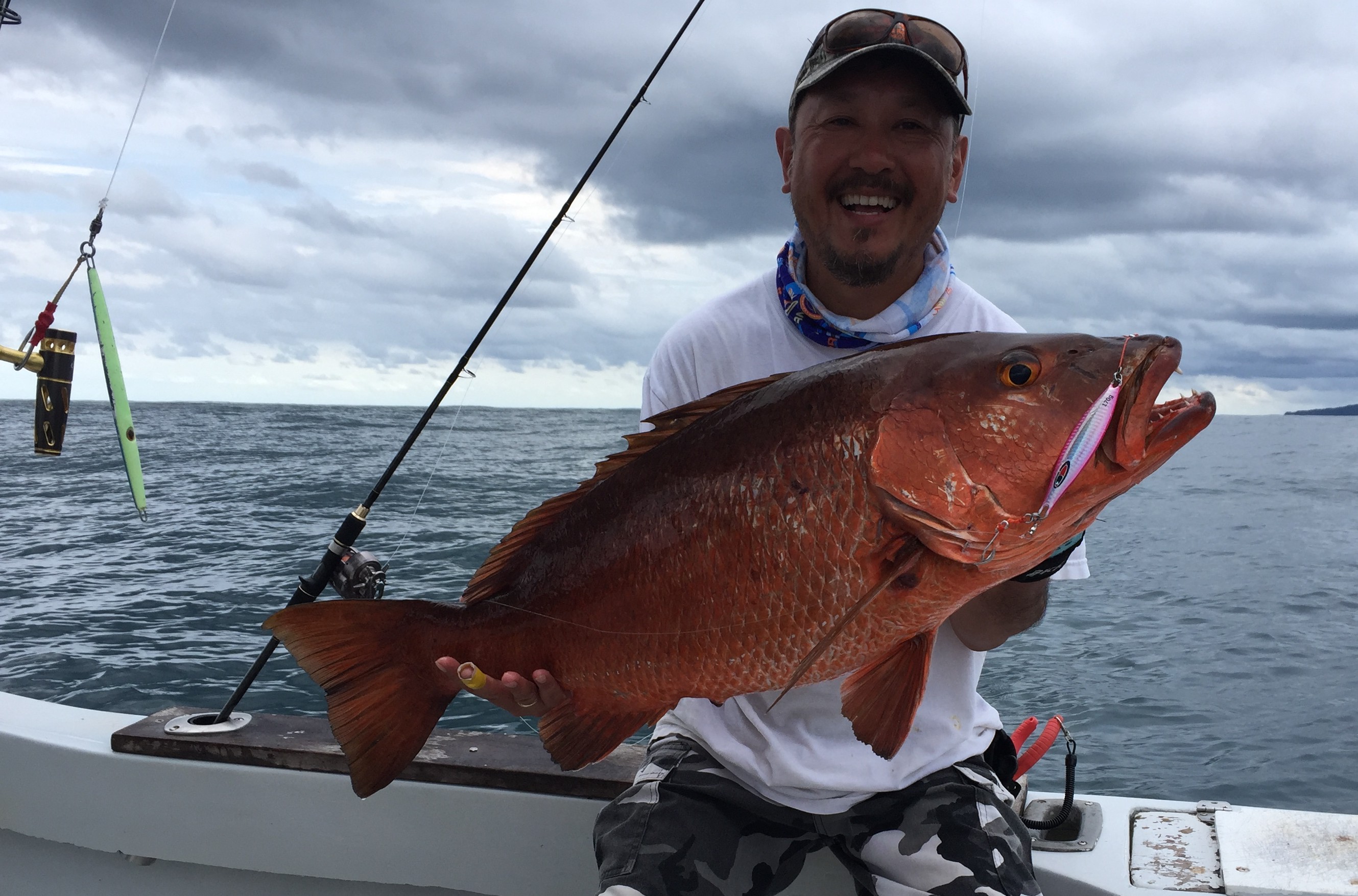
A beautiful Cubera Snapper caught on a PECHE SUD Slowman Rose 170g — Costa Rica.
Our Lures: Slowman & Solaris
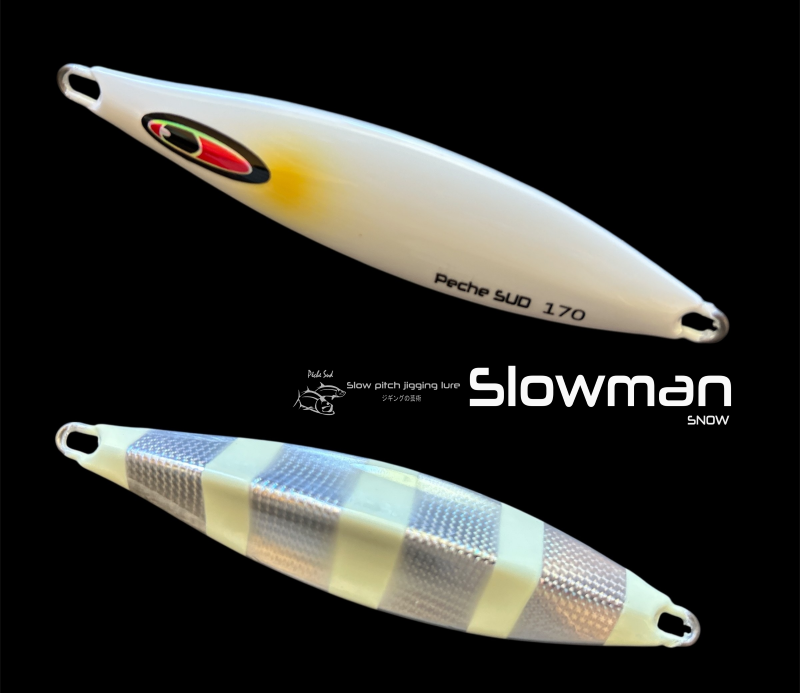
Slowman — The Classic
The Slowman is our flagship slow pitch jig. Its short, compact body with a strong offset creates the most pronounced wobbling action of any jig in our lineup — a slow, erratic fall with strong oscillation that produces vibrations detectable from a long distance. It imitates an injured baitfish or squid.
Best for: targeting bottom species (grouper, snapper) and slow-falling presentations over structure. Available in multiple colours and weights.
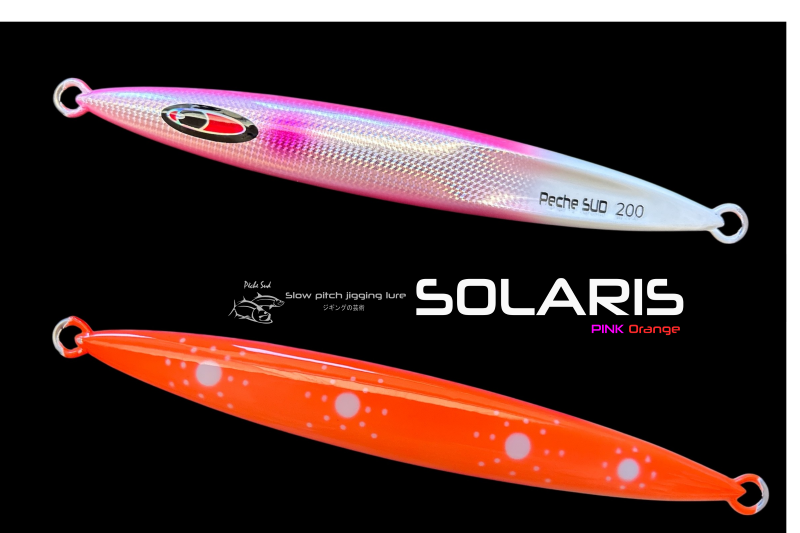
Solaris — The Versatile
The Solaris has a less pronounced offset than the Slowman, meaning it falls with less resistance and a more irregular, unpredictable action. This makes it the hybrid choice — it can be worked slowly like a traditional slow pitch jig, or animated faster to trigger the pursuit instinct of passive or lethargic fish.
Best for: days when fish aren’t biting, mixed pelagic and bottom fishing, or anglers who want one lure that does it all.
Choosing the Right Jig Weight
The general rule is 2 grams per metre of depth. Fishing at 100 metres? Start with a 200g jig. But two critical variables can change everything:
Current is the most important factor. Strong current will sweep your jig sideways before it reaches bottom, meaning you lose contact with the strike zone. In heavy current, multiply your base weight by up to 2.5x to maintain bottom contact.
Boat drift speed matters just as much. If strong wind is pushing your boat quickly, a light jig will trail behind at an angle, creating a large belly in your line. This kills sensitivity and makes it impossible to feel bites. Go heavier to keep the line as vertical as possible.
Gear: Rod, Reel & Line
Rod
Choose a short rod (maximum 7 feet) with a parabolic action. The flexibility of the tip is essential — you use it to “load” the rod and bounce the jig in a rhythmic motion. A stiff rod defeats the purpose of slow pitch technique.
Reel
A conventional (overhead) reel is the best choice for slow pitch jigging. Positioned above the rod, it gives you a full range of arm motion without risking hitting the side of the boat. A spinning reel (positioned below the rod) forces you to angle your arms outward to avoid the gunwale — manageable, but less comfortable during a long session.
Whatever reel you choose, it should:
- Hold at least 300 metres of line
- Be as light as possible to reduce arm fatigue
- Have a smooth, reliable drag
Line
Use braided line, 40 lbs (PE 2.0) as your ideal starting point — with a range of 30–60 lbs depending on conditions. Braid is essential because its thin diameter cuts through current with minimal resistance, keeping your jig in the strike zone longer. Always add a fluorocarbon leader (60–80 lbs) to protect against the teeth of barracuda and the abrasion of rocky bottom.
Choosing the Right Captain — The Most Critical Decision
Your captain will make or break your trip. A great slow pitch jigging captain is not the same as a trolling guide. Here’s what to look for:
- GPS full of waypoints: A serious captain knows his spots. His GPS should have dozens of marked locations — underwater humps, ledges, drop-offs, rocky patches, artificial reefs.
- He moves if nothing happens: A good jigging captain fishes a spot for 10–15 minutes. No action? He moves. He doesn’t anchor and wait.
- He has a fishfinder/sonar: Non-negotiable. He needs to be able to read the bottom and identify fish before you drop a jig.
- He manages drift actively: The best captains use their engine to constantly correct the boat’s drift, especially in wind. This keeps your line straight, as vertical as possible in the strike zone. This is where you see the difference between a good and great captain.
- He knows the difference between jigging and trolling: Ask him directly. Ask to see his jigging gear. If he hesitates or suggests trolling as an alternative, find another captain.
Quick Summary: Checklist Before Your Trip
| Item | Recommendation |
|---|---|
| Jig weights | 80g–250g, variety; 2g per metre rule |
| Quantity | 3–4 jigs per day (5–6 per day in Cuba) |
| Rod | Max 7ft, parabolic action |
| Reel | Conventional preferred, 300m capacity |
| Line | Braid 40 lbs + fluorocarbon leader 60–80 lbs |
| Destinations | Cuba, Costa Rica (Atlantic & Pacific) |
| Captain check | GPS waypoints, sonar, active drift management |
Ready to Try Slow Pitch Jigging?
Browse our full selection of Slowman and Solaris jigs — designed and tested for tropical saltwater fishing.